Creating a DIY chicken coop is not just about giving your backyard hens a place to live—it’s about crafting a functional, safe, and stylish environment that fits your space and lifestyle. Whether you are a first-time chicken owner or looking to upgrade an existing setup, building your own allows for customization, cost savings, and the satisfaction of a hands-on project. In this guide, I’ll walk you through a step-by-step chicken coop building guide for beginners, share practical tips from my personal experience, and include a real-life case study to inspire your project.

Content
Materials and Tools Needed for Your DIY Chicken Coop
Before starting your DIY chicken coop, make sure you have all the materials and tools ready. A well-prepared setup saves time, reduces frustration, and ensures a smooth build.
Materials:
- Pressure-treated lumber (2x4s, 2x6s) for the frame
- Plywood or OSB sheets for walls and floor
- T1-11 siding or exterior-grade plywood for outer walls
- Chicken wire or hardware cloth (for predator protection)
- Roofing materials: shingles or corrugated metal panels
- Hinges, latches, screws, and nails
- Nesting boxes, perches, and feeders
Tools:
- Circular saw and jigsaw
- Drill and driver bits
- Measuring tape and carpenter’s square
- Hammer or framing nailer
- Safety gear (gloves, goggles, dust mask)
DIY Chicken Coop: Step-by-Step Building Guide for Beginners
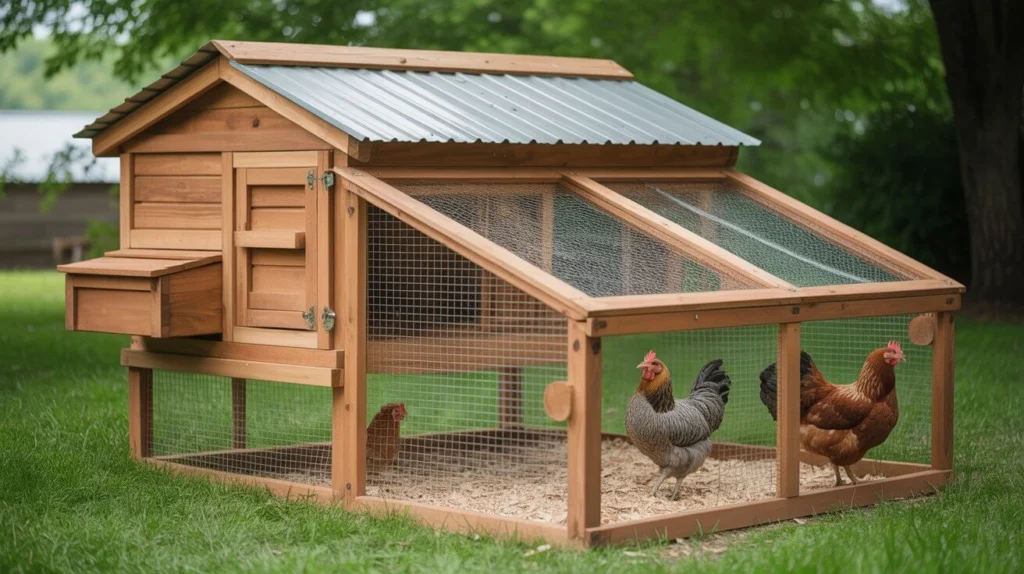
Building a chicken coop can seem intimidating at first, but breaking it down step by step makes it manageable.
1. Planning Your Coop Layout
Start by measuring your available space. A general rule is 3–4 square feet per chicken inside the coop and 8–10 square feet in the outdoor run. If your yard is small, consider a compact backyard chicken coop with multi-level perches.
Tip: Sketch your design on paper or use free online tools to visualize your coop layout, including nesting boxes, roosts, and the run.
2. Constructing the Frame and Base
The frame forms the backbone of your DIY chicken coop.
- Cut and assemble the base frame using pressure-treated lumber.
- Ensure it is level and sturdy—this will support walls, roof, and nesting boxes.
- Raise the base slightly off the ground to prevent moisture damage and make cleaning easier.
Pro Tip: Adding small bricks or cinder blocks under corners enhances durability, especially if your yard is uneven or damp.
3. Installing Walls and Siding
Once the frame is ready, attach the walls.
- Use plywood or OSB sheets cut to size for the walls.
- For a stylish finish, apply T1-11 siding—it’s durable and weather-resistant.
- Include openings for windows or ventilation, crucial for chicken health.
Safety Note: Use hardware cloth instead of chicken wire for the lower walls and run to protect your hens from predators like raccoons or foxes.
4. Adding Doors, Nesting Boxes, and Perches
Doors and nesting areas are critical for accessibility and comfort.
- Build a main access door for cleaning and maintenance.
- Add smaller chicken doors for hens to move in and out safely.
- Construct nesting boxes (one box per 3–4 hens) with removable tops for easy egg collection.
- Install perches 2–3 feet above the floor, spaced about 12–15 inches apart.
Insider Tip: Sloped perches help hens maintain balance and minimize stress.
5. Installing the Roof
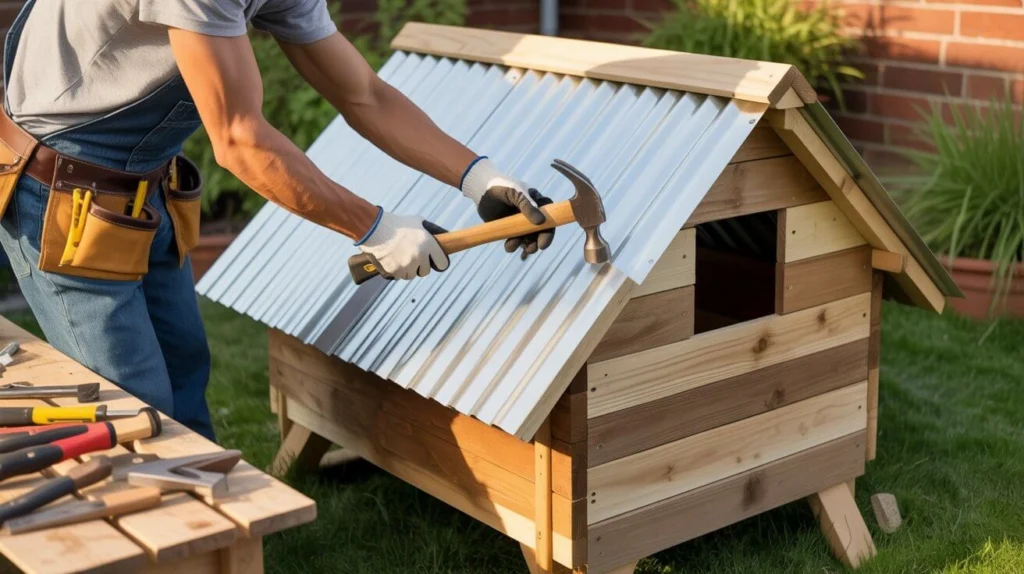
A strong roof is essential for your DIY chicken coop, protecting it against rain, snow, and sun.
- Use corrugated metal panels or shingles based on your climate.
- Ensure a slight overhang to prevent water from seeping into walls.
- Consider a hinged roof section above the nesting boxes for easier cleaning.
6. Predator Protection Tips
Keeping your chickens safe is crucial.
- Bury hardware cloth at least 12 inches underground around the run to deter digging predators.
- Add secure latches and locks on doors.
- Install a motion-sensor light or camera if your area has frequent wildlife activity.
Design Ideas and Small Yard Solutions
Even small yards can comfortably accommodate chickens with a bit of creativity and smart planning. The right coop design not only saves space but also adds character to your outdoor area:
- Vertical chicken coops: Multi-tiered structures help maximize limited floor space while giving your hens room to perch and move comfortably.
- Portable or movable coops (chicken tractors): These allow chickens to free-range safely, prevent ground damage, and keep your lawn healthier over time.
- Stylish painted finishes: Using weatherproof paint lets you blend the coop seamlessly with your backyard décor, creating a setup that looks intentional rather than out of place.
With thoughtful design choices, even the smallest backyard can support happy, healthy hens—proving that raising chickens is about smart use of space, not yard size. And while your flock provides fresh eggs, the idea of Fried chicken might be popular at the dinner table, your coop’s real purpose is ensuring your birds stay safe, comfortable, and well cared for.
Maintenance Tips for a Healthy Chicken Coop
A good coop is not just about construction but also about ongoing care:
- Clean weekly: Remove droppings and replace bedding.
- Inspect for damage: Check for loose boards or holes where predators could enter.
- Ventilation: Ensure airflow without drafts, especially in winter.
- Pest control: Keep bedding dry and use diatomaceous earth if needed.
DIY Chicken Coop: Common Mistakes to Avoid When Building Yours
- Overcrowding your chickens
- Skipping ventilation and insulation
- Using chicken wire instead of hardware cloth
- Neglecting predator protection
- Choosing materials not suited for outdoor conditions
Real-Life Case Study: Sarah’s Backyard Chicken Adventure
Sarah, a resident of Austin, Texas, wanted a DIY chicken coop on a budget for her three hens.
- Problem: Limited backyard space and a tight budget.
- Solution: She built a compact vertical coop with multi-level perches and a small outdoor run.
- Outcome: Within two weeks, her hens were comfortably roosting, laying eggs, and safely protected from local predators.
Sarah’s experience shows that with planning, budget-friendly materials, and smart design choices, even small spaces can host a safe and functional chicken coop.
Conclusion
Building a DIY chicken coop is a rewarding project that blends creativity, practicality, and a touch of personal style. Whether you’re designing a coop for a small backyard flock or planning a larger setup, prioritizing safety, comfort, and strong predator protection helps ensure your chickens stay happy and healthy.
Careful planning is key—choose durable materials, add proper ventilation, and design easy access points for cleaning and daily care. Much like a Galley kitchen remodel, success comes down to smart use of space, thoughtful layout, and long-term functionality. With patience and a bit of effort, your hens will thrive in a home you designed and built yourself—just like Sarah’s backyard adventure.
FAQs
Is it cheaper to build your own chicken coop?
Yes, building your own DIY chicken coop saves money compared to buying pre-made ones and allows for custom designs.
What is the cheapest way to make a chicken coop?
Use reclaimed wood, basic plywood, and simple hardware. Planning efficiently keeps your DIY chicken coop budget-friendly.
What is the best material for chicken run walls?
Hardware cloth or welded wire is safest for chicken runs, protecting hens from predators while ensuring durability.

Joan Woolf is a home blogger who loves to share her experiences with others. She likes being motivated and encourages people to be the best they can be.