Keeping hardwood floors clean is not just about appearance—it’s about protecting your investment for years. As someone who has worked on multiple home styling and flooring care projects under SZ Home Art, I’ve seen how the right cleaning routine can completely transform the look and life of wooden flooring.In this guide, I’ll break down how to clean hardwood floors in a simple, practical way using real techniques, safe products, and proven methods. You’ll also learn what most homeowners get wrong, and how to avoid damaging your floors while keeping them naturally shiny.
Content
How to Clean Hardwood Floors: Understanding Floor Types Before Cleaning
Before jumping into cleaning, it’s important to understand that not all hardwood floors are the same. This is one of the most overlooked steps in how to clean hardwood floors properly and often leads to avoidable damage when ignored.
Sealed vs Unsealed Hardwood Floors
- Sealed hardwood floors: Protected with polyurethane or similar coating. Easier to clean and more water-resistant.
- Unsealed hardwood floors: More sensitive to moisture and require extra care.
Knowing your floor type helps you choose the right hardwood floor cleaning methods and avoid damage like warping or dull patches.
Essential Tools You’ll Need for Safe Cleaning
From my experience working on home interiors, using the right tools makes 70% of the difference when learning how to clean hardwood floors effectively and safely.
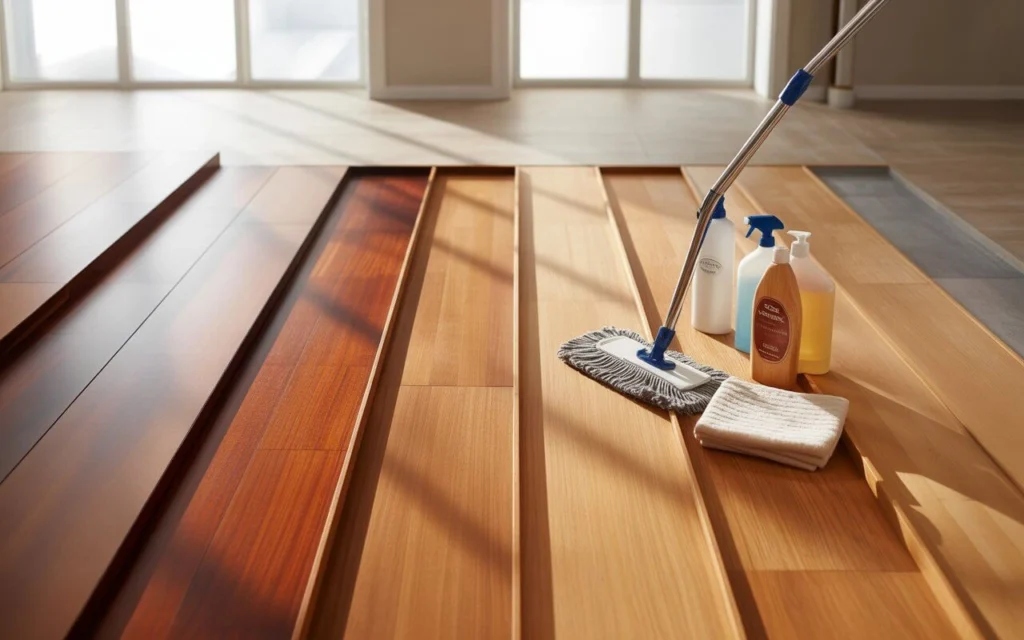
To properly clean wood floors, keep these ready:
- Microfiber mop (best for safe hardwood floor cleaners use)
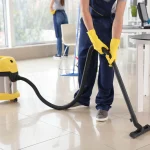
- Soft broom or vacuum (hard floor setting only)
- pH-neutral wood flooing cleaner
- Dry microfiber cloths
- Spray bottle for controlled cleaning
Avoid harsh chemicals or abrasive brushes—they are one of the biggest causes of long-term floor damage.
Daily Cleaning Routine for Hardwood Floors
If you want long-lasting shine, daily maintenance is non-negotiable.
Here’s a simple routine I always recommend:
- Sweep or vacuum dust daily
- Wipe small spills immediately
- Avoid dragging furniture
- Use felt pads under heavy items
This simple habit helps in dusting hardwood floors properly and prevents scratches from dirt particles acting like sandpaper.
How to Clean Hardwood Floors Without Damaging Finish
This is the most important section for homeowners.Follow these safe steps:
Step 1: Remove Dust First
Always start dry. Use a microfiber mop or vacuum.
Step 2: Prepare Cleaning Solution
Use a mild, pH-balanced cleaner or a lightly diluted solution. Avoid soaking the floor.
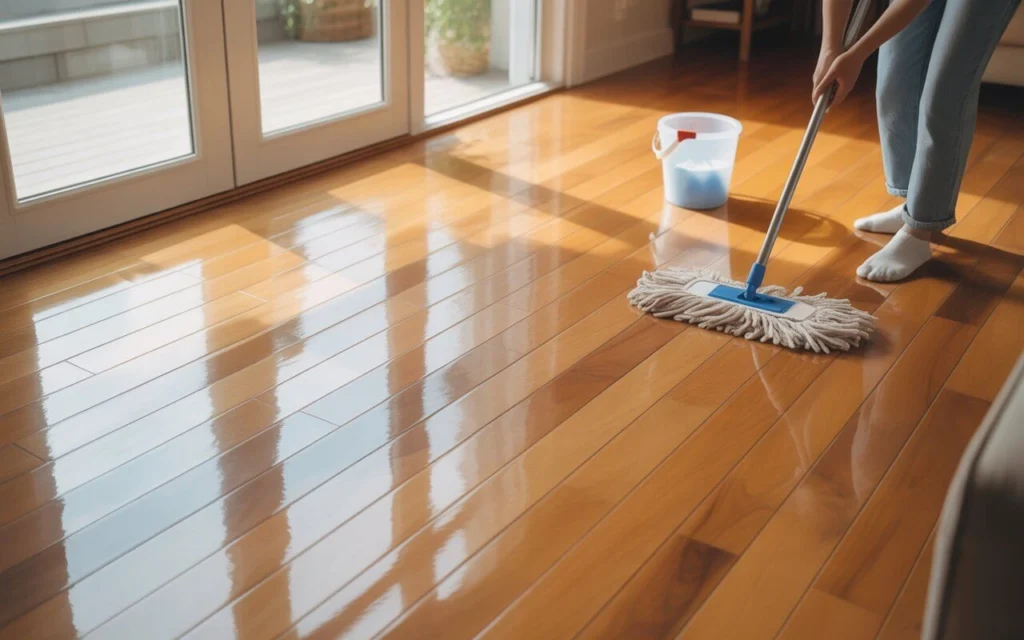
Step 3: Light Damp Mopping
This is an essential step in how to clean hardwood floors properly—the mop should always be lightly damp, never soaking wet.
Step 4: Dry Immediately
Use a clean cloth to prevent water absorption.This method is especially important for cleaning sealed hardwood floors because it preserves the protective layer.
Best Homemade Solution for Cleaning Hardwood Floors
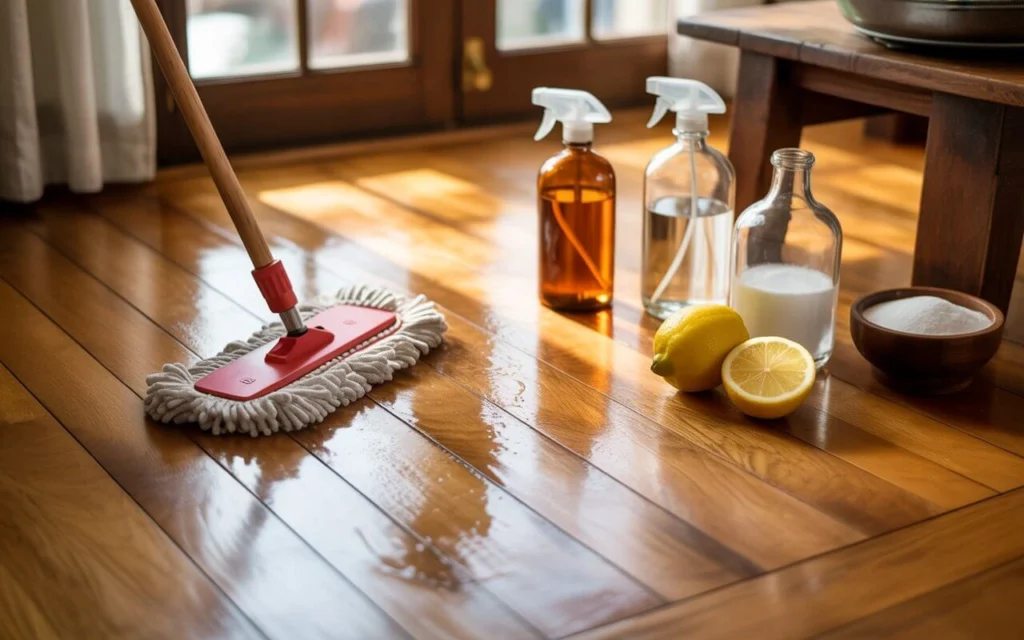
Many homeowners prefer natural options. One of the most common questions I get is about safe DIY cleaning when learning how to clean hardwood floors without causing damage.
A simple solution I often suggest:
- Warm water
- A few drops of mild dish soap
- (Optional) very small amount of vinegar
This is the best homemade solution for cleaning hardwood floors, but it must be used carefully. Too much vinegar can dull the finish over time.
How to Deep Clean Hardwood Floors Properly
Every few weeks, a deeper clean is needed.
Here’s my step-by-step approach:
- Remove all furniture if possible
- Vacuum thoroughly
- Use a damp microfiber mop with wood-safe cleaner
- Work in small sections
- Dry each section immediately
This method is ideal for anyone searching how to deep clean hardwood floors without sanding.
How to Clean Hardwood Floors: Removing Stains Safely Without Damage
Spills happen—but the way you treat them matters.
Food and Drink Stains
- Clean immediately with a damp cloth
- Avoid scrubbing aggressively
Sticky Residue
- Use a mild soap solution
- Gently wipe instead of rubbing
Water Marks
- Dry quickly
- Use a wood-safe polish if needed
This approach ensures you protect the surface while maintaining natural shine.
Critical Errors to Avoid While Cleaning Hardwood Floors
In my professional experience, these mistakes are the main reason people struggle with how to clean hardwood floors properly and end up losing their floor’s natural beauty early.
- Using too much water
- Steam mops on sealed wood
- Harsh chemical cleaners
- Ignoring scratches and buildup
- Using rough scrubbers
Avoiding these mistakes is key to preventing scratches on hardwood floors and extending lifespan.
How Often Should You Clean Hardwood Floors
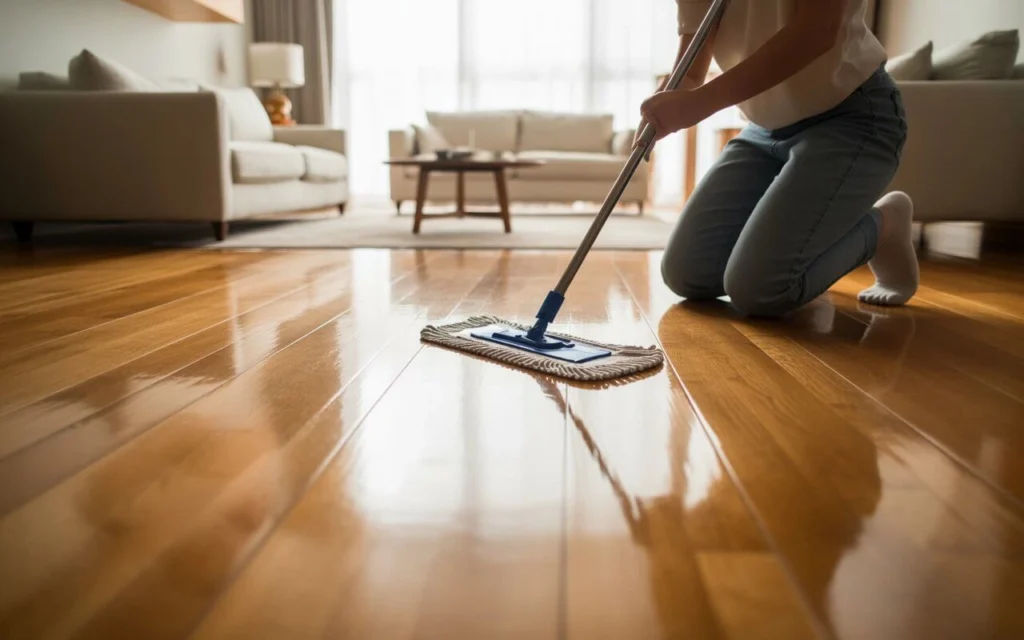
This depends on usage, but here’s a simple guide:
- Daily: Light sweeping or vacuuming
- Weekly: Damp mopping
- Monthly: Deep cleaning
This schedule ensures proper how to clean hardwood floors practices are followed consistently, helping maintain long-term shine and durability.
Real-Life Case Study: Living Room Floor Restoration
One of my recent projects at SZ Home Art involved a family home where the hardwood floors had lost their shine due to improper cleaning habits.
Problem:
- Dull surface
- Visible streaks
- Minor scratches
- Sticky buildup in high-traffic areas
What went wrong:
They were using excessive water and strong chemical cleaners daily while trying to learn how to clean hardwood floors, which led to long-term surface damage.
Solution applied:
- Switched to a pH-neutral cleaner
- Introduced microfiber mopping system
- Implemented weekly cleaning schedule
- Added protective furniture pads
Result after 3 weeks:
- Noticeable shine returned
- Surface became smoother
- No new scratches
- Overall cleaner and brighter appearance
This is a perfect example of how small changes in cleaning habits can completely transform flooring.
Simple Ways to Keep Hardwood Floors Shiny for Years
Maintenance is just as important as cleaning when learning how to clean hardwood floors and keeping them in long-lasting, good condition.
Follow these long-term care habits:
- Keep humidity balanced in the room
- Use rugs in high-traffic areas
- Avoid walking with shoes indoors
- Polish occasionally with wood-safe products
These steps help maintain natural shine and reduce the need for frequent deep cleaning.
Final Thoughts on Cleaning Hardwood Floors
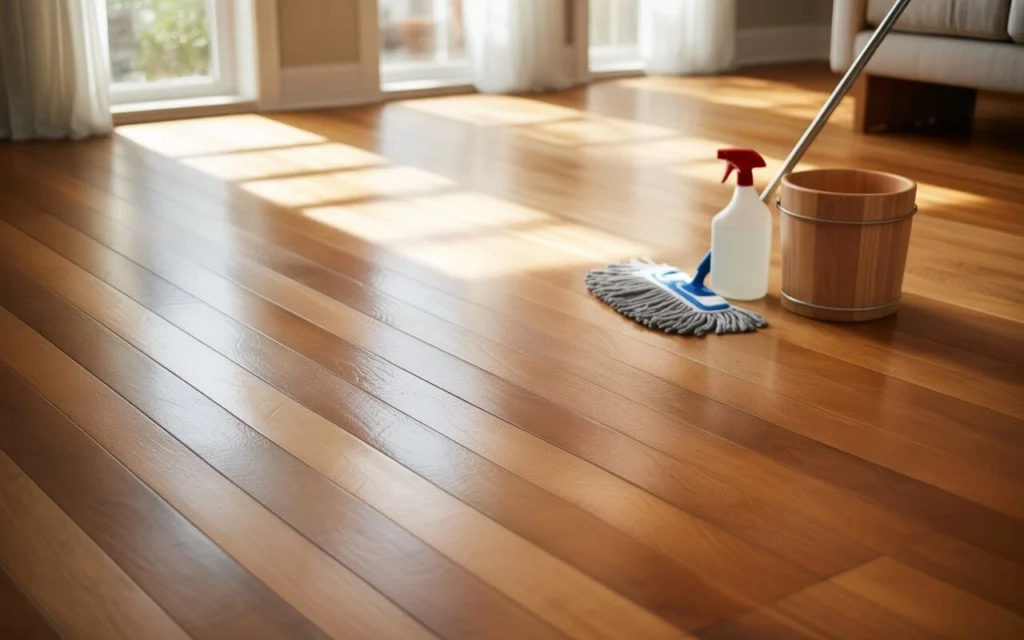
Learning how to clean hardwood floors properly is not complicated, but it does require consistency and the right approach. Most floor damage happens not because of dirt, but because of poor cleaning habits such as excessive water, harsh chemicals, or rough tools. Similar to understanding How to do dry cleaning at home techniques safely, hardwood floor care also depends on using gentle products and proper cleaning methods to avoid long-term damage.
If you follow safe cleaning practices, use soft and floor-friendly products, and maintain a regular routine, your hardwood floors can stay beautiful, polished, and durable for decades without the need for costly repairs or refinishing.
FAQs
What is the best thing to clean real hardwood floors with?
Use a microfiber mop with a pH-neutral wood floor cleaner for safe and effective cleaning.
What is the best way to clean hardwood floors?
The best way is dry dusting first, then light damp mopping using a wood-safe cleaner.
What should you not use on hardwood floors?
Avoid bleach, ammonia, steam mops, and excessive water as they can damage the finish.
What is the best cleaning system for hardwood floors?
A microfiber mop system with a spray-based wood cleaner is the most efficient and safe option.
What destroys hardwood floors?
Too much moisture, harsh chemicals, and abrasive cleaning tools are the main causes of damage.

Joan Woolf is a home blogger who loves to share her experiences with others. She likes being motivated and encourages people to be the best they can be.