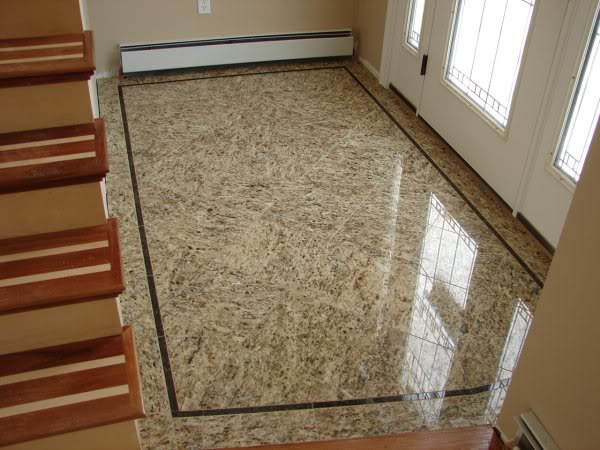
Renovating a kitchen can feel overwhelming, especially when it comes to selecting the right kitchen floor tile. The flooring not only needs to be durable but also stylish enough to complement the rest of your kitchen design. In my years as a [SZ home art] expert, I’ve seen homeowners struggle with this decision, but with the right guidance, it can be a fun and creative process. In this post, I’ll walk you through everything from materials to layouts, including practical tips, use cases, and a real-life case study to make your choice easier.
Content
Why Choosing the Right Kitchen Floor Tile Matters
Your kitchen floor tile is one of the most used surfaces in your home. It sees spills, foot traffic, dropped utensils, and even heavy appliances. Choosing the right kitchen flooring options is essential for both aesthetics and functionality. A poor choice can lead to costly repairs, while the right tile can elevate your kitchen’s overall design.
Think of your kitchen floor tile as the foundation of your space. Just like painting walls or selecting cabinetry, the tile sets the tone. Durable tiles protect your kitchen from wear and tear, while stylish designs enhance the room’s personality.
Popular Kitchen Floor Tile Materials
Selecting the right material is the first step in your decision-making process. Here are some popular options:
1. Ceramic Tiles
Ceramic tiles are timeless, affordable, and easy to clean. They come in a variety of patterns and colors, making them ideal for any kitchen design. Their durability makes them one of the best kitchen floor tile for durability options available.
Pros: Affordable, wide variety, easy maintenance Cons: Can be slippery when wet, harder underfoot
2. Porcelain Tiles
Porcelain tiles are denser and more water-resistant than ceramic. They are perfect for high-traffic kitchens or homes with kids and pets. Ceramic vs porcelain kitchen floor tiles is a common question; the main difference is durability and water resistance, with porcelain being superior in both.
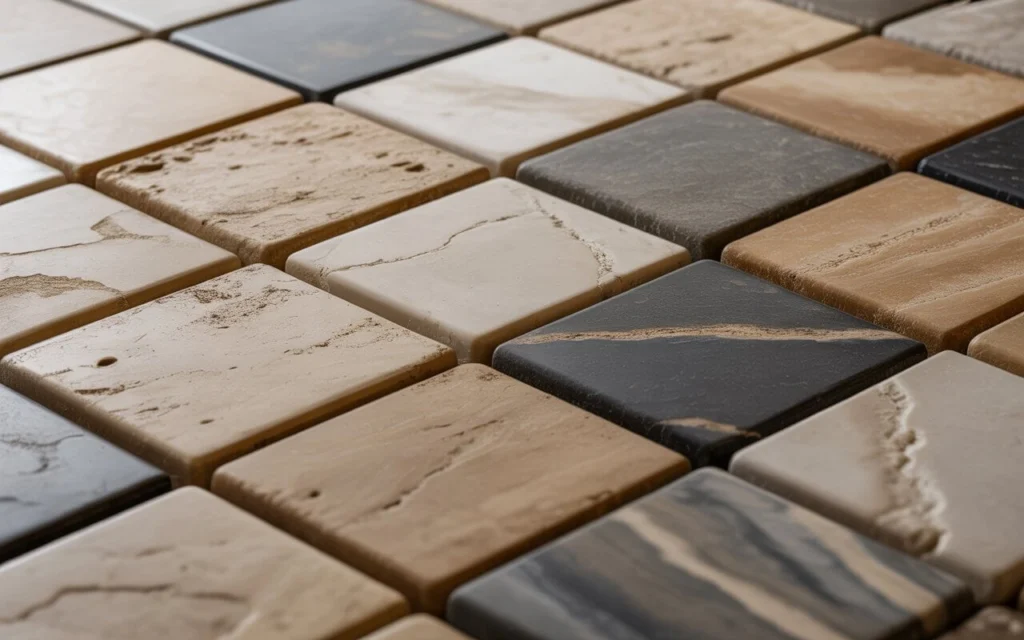
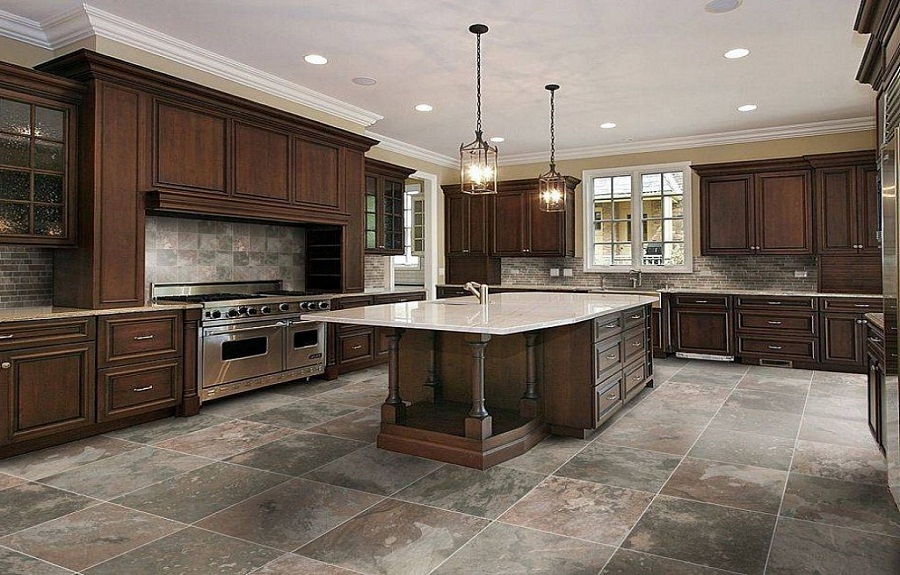
For a more rustic or elegant look, consider natural stone tiles like slate, marble, or travertine. These tiles bring unique textures and patterns but require sealing to maintain their beauty.
Pros: Unique aesthetics, long-lasting Cons: High maintenance, can be expensive
Modern Kitchen Floor Tile Designs
Once you’ve chosen the material, consider the style. Modern kitchen floor tile designs are trending towards neutral colors, geometric patterns, and wood-look finishes. Here are a few ideas:
Wood-Look Tiles: Perfect for adding warmth without compromising durability
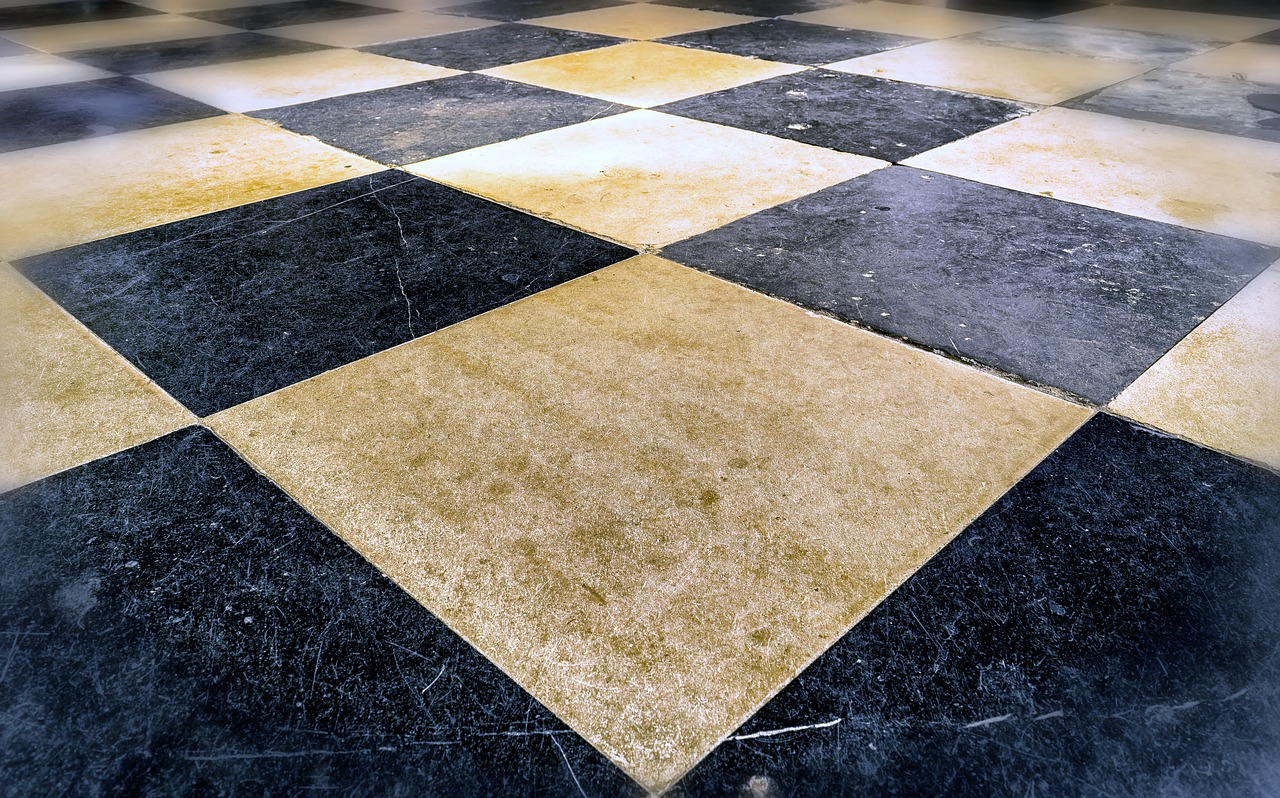
Patterned Tiles: Ideal for a statement or accent area
Large Format Tiles: Create a sleek, seamless look and make smaller kitchens feel larger
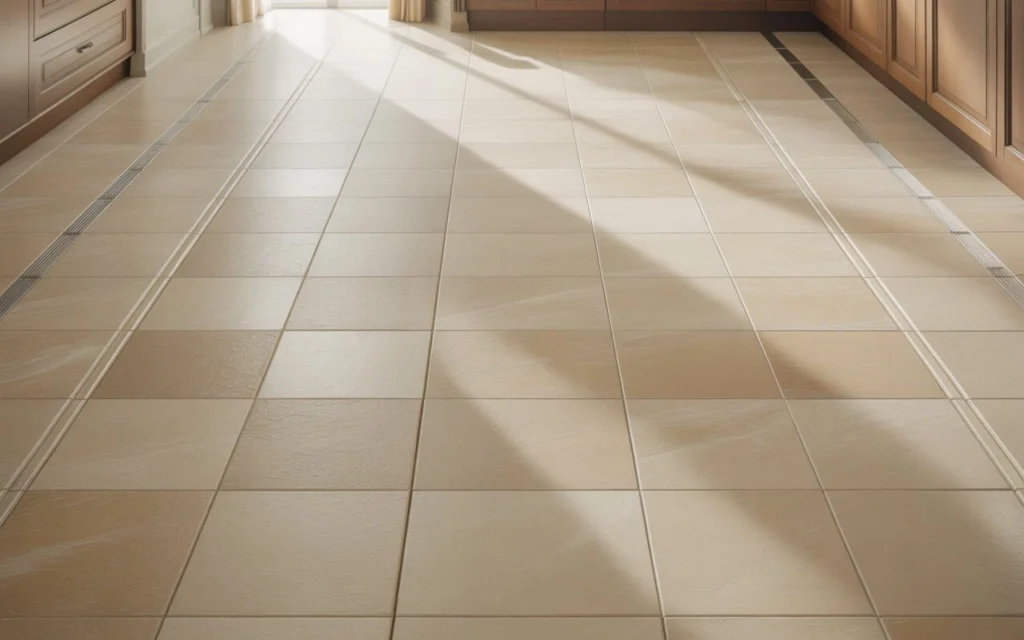
When I recently helped a client redesign their compact kitchen, we used large-format porcelain tiles in a soft beige. The room instantly felt bigger, brighter, and more cohesive.
Layout Options for Kitchen Floor Tiles
The way tiles are laid out can dramatically impact your kitchen’s appearance. Consider these layouts:
Straight Lay: Simple, classic, and easy to install
Diagonal Lay: Creates visual interest and adds dimension
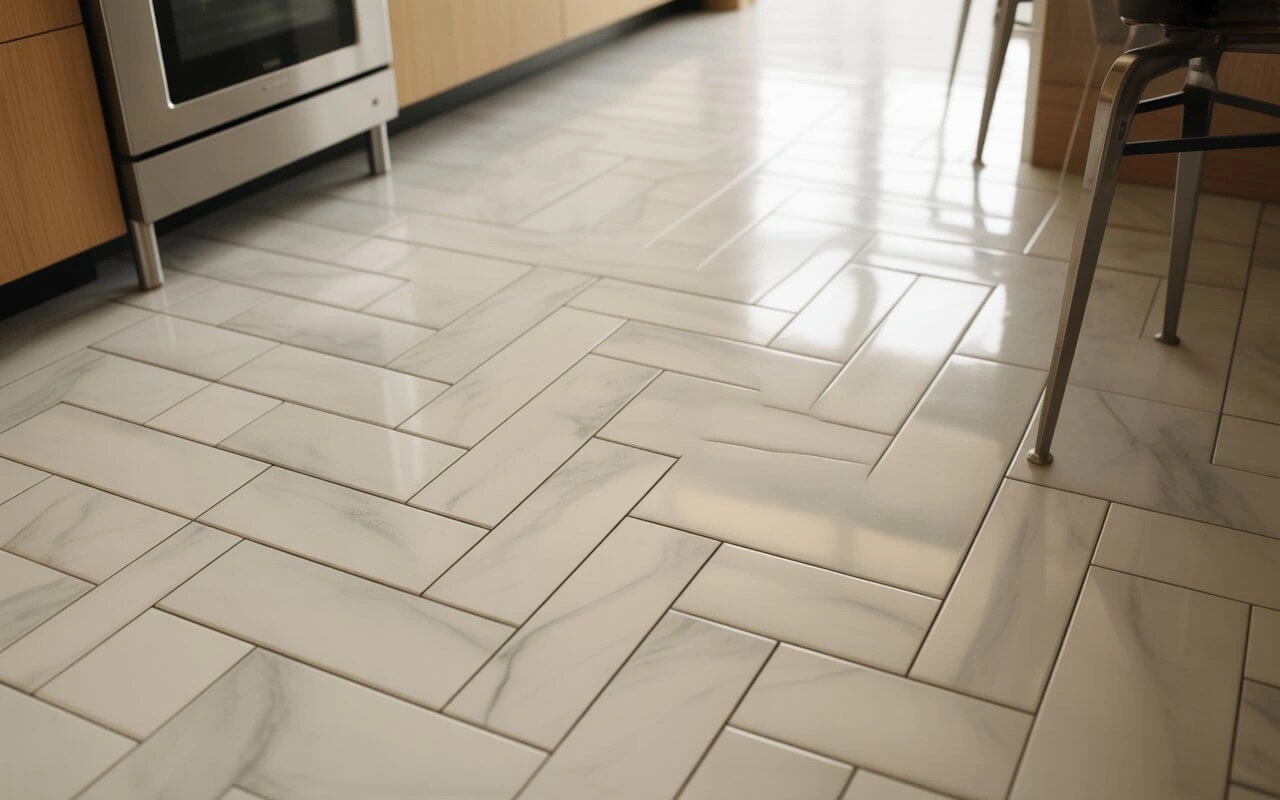
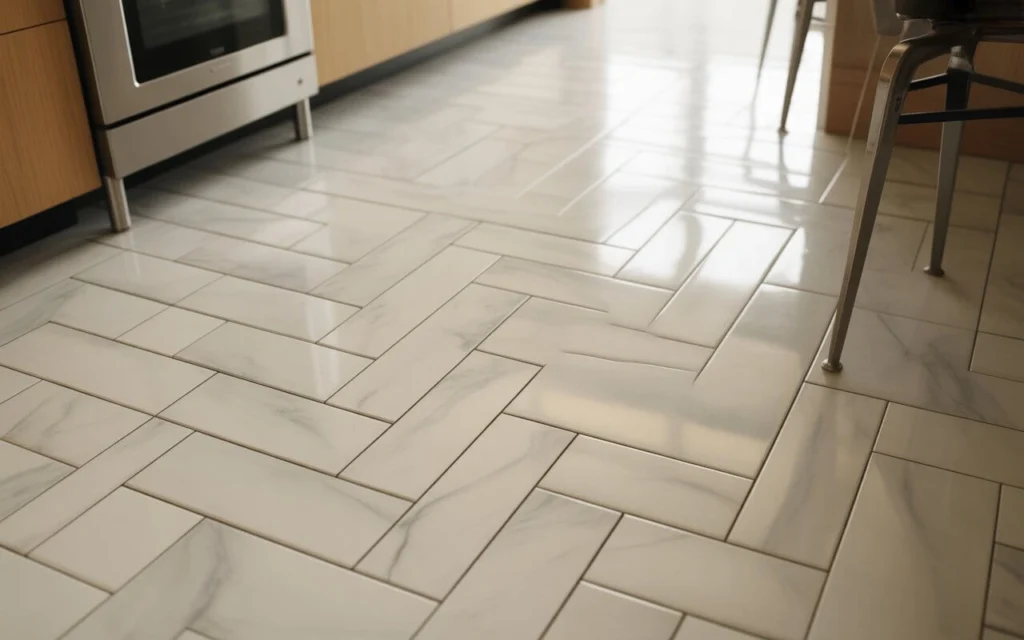
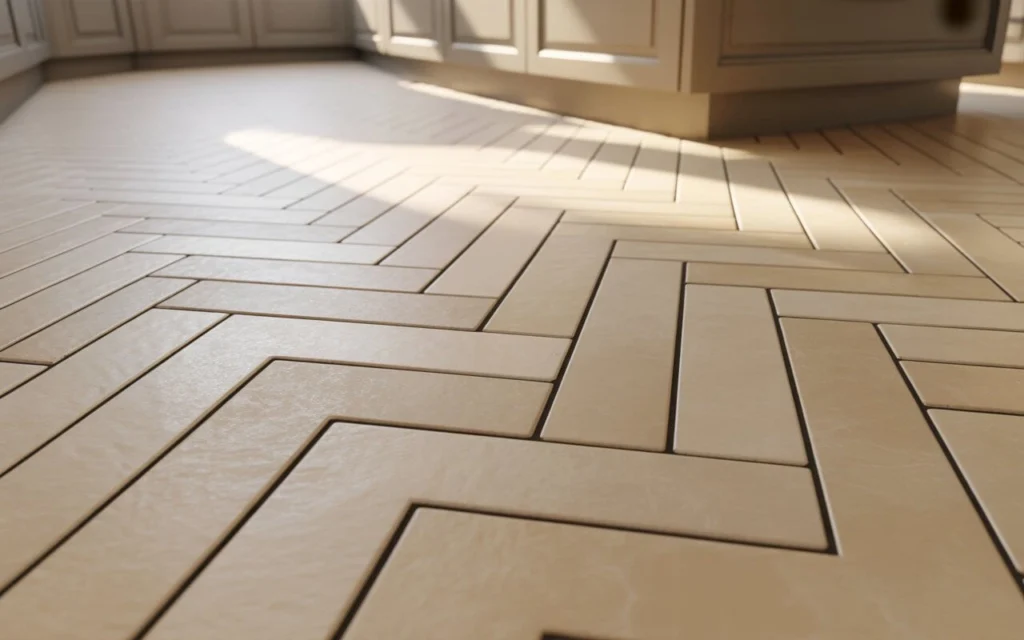
Herringbone or Chevron: Modern, stylish, perfect for accent areas
Your choice of layout should complement both the tile pattern and your kitchen’s shape.
Installation Tips and Maintenance
Proper installation and maintenance can extend the life of your kitchen flooring. Here are some tips:
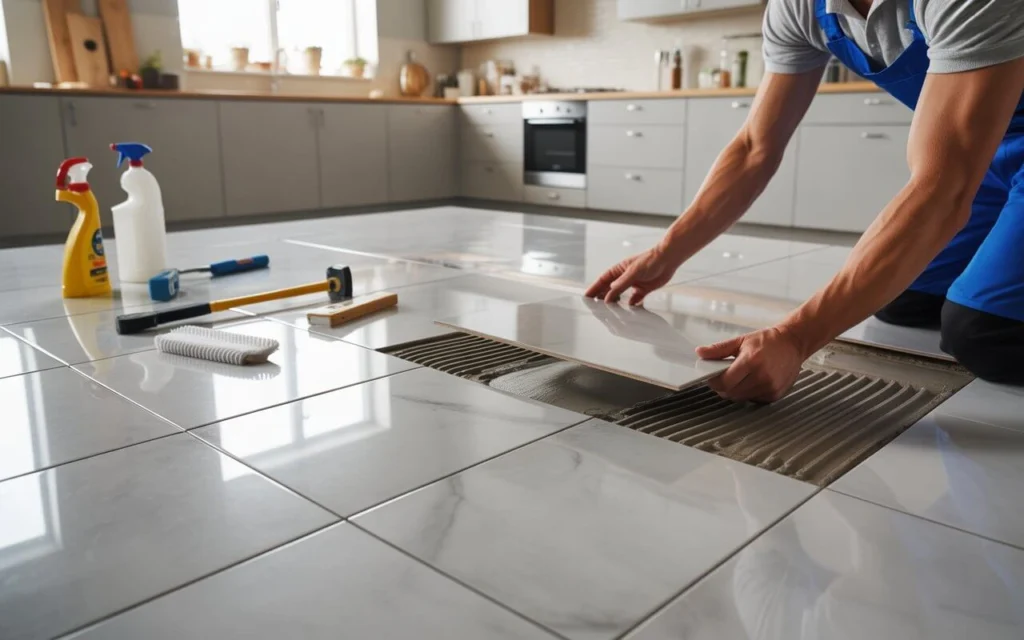
Hire Professionals: Especially for porcelain or stone tiles, professional installation ensures durability.
Use Quality Adhesives and Grout: Prevents cracking and water damage.
Regular Cleaning: Sweep and mop regularly to prevent dirt buildup.
Sealing (for Stone Tiles): Keeps natural stones stain-free and looking fresh.
Real-Life Case Study: Transforming a Family Kitchen
The Jacksons, a family of five, were tired of their worn-out vinyl floor. They wanted something durable, stylish, and easy to maintain. After evaluating several kitchen flooring options, they decided on porcelain wood-look tiles.
Challenge: Heavy foot traffic, frequent spills, and a desire for a modern yet warm aesthetic.
Solution: Porcelain tiles in a herringbone pattern, neutral brown tones, complemented with light gray grout.
Outcome: The kitchen now feels spacious, elegant, and functional. Cleaning spills is easy, and the family enjoys the stylish yet practical design.
This case proves how selecting the right material and layout can dramatically improve both aesthetics and usability.
Choosing the Right Color for Your Kitchen Floor Tile
Color is just as important as material. Neutral colors like beige, gray, or soft whites are versatile, while bold colors or patterns can make your kitchen stand out. Consider:
Matching with Cabinets: Ensure the floor complements your cabinetry and countertops.
Lighting Matters: Dark tiles in a dim kitchen can make the space feel smaller.
Personal Style: Choose colors that reflect your personality and design goals.
Final Thoughts
Choosing the perfect kitchen floor tile doesn’t have to be daunting. By focusing on durability, style, layout, and proper installation, you can create a kitchen floor that lasts for years while enhancing the room’s overall appeal.
Remember: your kitchen floor is both functional and a design statement. Don’t rush the decision—explore materials, layouts, and colors until you find the one that truly elevates your space, especially when considering modern Kitchen remodel trends that blend practicality with style.
FAQs
What type of tile is best for kitchen floors?
Porcelain and ceramic tiles are the most durable and stylish kitchen floor tile options.
What is the new trend in kitchen floors?
Modern kitchen floor tile designs focus on wood-look, large-format, and geometric patterns.
Which color tiles are best for a kitchen floor?
Neutral shades like beige, gray, or soft whites work best for versatile kitchen floor tile designs.
Should the kitchen floor be lighter or darker than the countertop?
Lighter floors with darker countertops create balance; contrast enhances your kitchen’s overall design.
Joan Woolf is a home blogger who loves to share her experiences with others. She likes being motivated and encourages people to be the best they can be.